The end of app switching is here. Discover how the “Intent-as-an-Interface” shift and AI-native workflows are redefining digital strategy for modern businesses in 2026.
For over a decade, the playbook for digital growth has been predictable: build a faster app, optimize a browser storefront, and try to capture user attention across fractured tabs. But midway through 2026, that playbook is becoming obsolete.
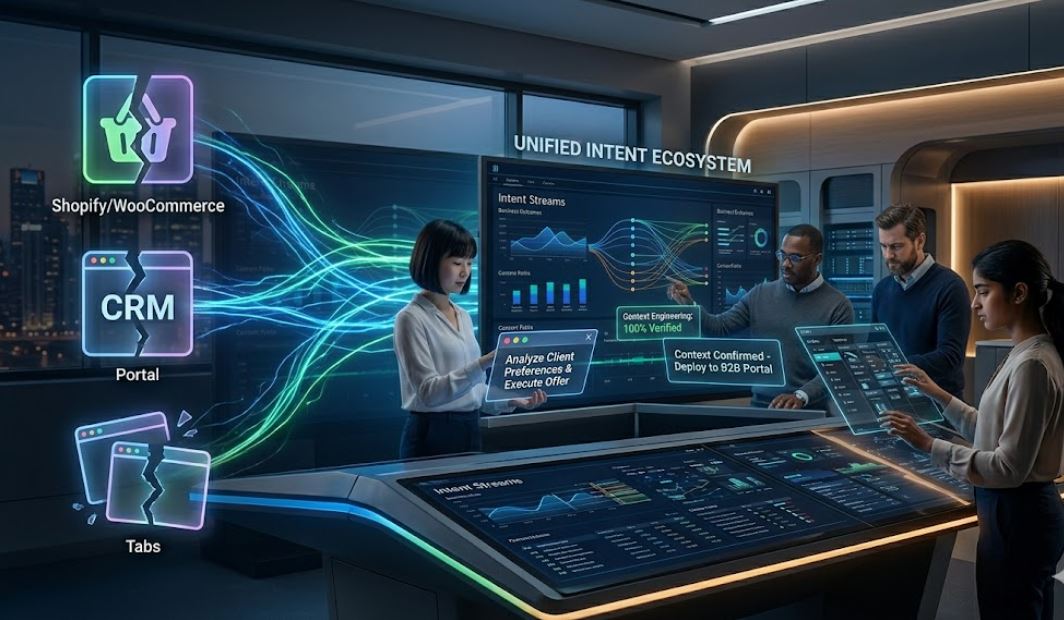
A profound shift is transforming enterprise landscapes: Intent is the new interface. The dominant digital interaction models are rapidly shifting away from fragmented apps and separate web browsers into a single, unified, AI-native environment. At Sitara Innovations, we help businesses navigate these exact transformations—moving past isolated code scripts to build durable, intelligent architectures.
Chapter 1: The End of App Switching
According to leading 2026 emerging technology reports from global firms like JPMorgan Chase, workflows are collapsing from separate applications into continuous, personalized streams. Instead of a user manually navigating to a web browser, opening three different software platforms, and copy-pasting data, the software layer now anticipates, executes, and transacts directly via conversational or modal intents.
The Frictionless Funnel
Imagine an executive managing an complex enterprise ecosystem.
-
The Old Way: Opening a logistics application to check stock, opening a custom CRM to pull client records, and launching a third-party gateway to adjust invoices.
-
The 2026 Intent Layer: Instructing an integrated digital workspace: “Re-allocate 15% of our regional stock to our high-tier clients and notify their operations team via a custom-branded portal.”
The underlying AI architecture maps out the logic, speaks to the necessary APIs, updates the records, and renders the result dynamically. The interface itself alters in real-time based on the intent of the user.
Chapter 2: Context Engineering—The Real Engine of Growth
For digital strategists, this paradigm shift means that standard web design patterns must evolve. It is no longer enough to offer generic, static menus. The future belongs to Context Engineering.
[User Intent Expressed]
          │
          ▼
[Context Engine: Analyzes History, Preferences, System State]
          │
          ▼
[Dynamic Generation of Temporary Interface or Action Plan]
To drive measurable ROI, systems must maintain a comprehensive, end-to-end understanding of data ecosystems. By mapping specialized operational data into structured knowledge graphs, businesses can provide AI agents with the precise context required to prevent errors, improve accuracy, and deliver tailored consumer experiences.
Chapter 3: Strategic Infrastructure Rebuilding for 2026
As usage explodes across automated platforms, forward-thinking enterprises are discovering that older cloud models struggle to handle production-scale inference costs efficiently. Moving through 2026, technology leadership is transitioning from experimental cloud pilots to structural infrastructure overhauls.
Organizations are adopting Strategic Hybrid Architectures:
-
Elastic Public Cloud: Utilized for heavy processing and initial model deployments.
-
Private Cloud Environments: Dedicated to managing hyper-sensitive internal business metrics and intellectual property.
-
Edge Computing Nodes: Deployed at the point of action for lightning-fast, low-latency execution.
This infrastructure balance guarantees that as your customer-facing platforms become more autonomous, your operational overhead remains optimized and scalable.
Chapter 4: Customer Accountability and the Trust Metric
As interfaces become invisible and run primarily on autonomous intents, customer expectations surrounding transparency have reached an all-time high. Studies indicate that the vast majority of modern consumers demand clarity on how corporate platforms interact with their data.
To retain digital trust, your intent-driven platforms must be built with explicit governance guardrails:
-
Explainable Logic: Systems must be capable of “showing their work,” demonstrating clearly how an automated agent reached a specific decision or recommendation.
-
Seamless Data Control: Users must have straightforward, understandable mechanisms to opt-in, modify, or completely remove their personalized data profiles.
-
Transparent Involvement: Concealing the presence of AI operations is a quick way to lose customer loyalty; businesses must proudly emphasize their advanced tech stacks as a core value proposition.
Conclusion: Reimagining the Digital Blueprint
The shift toward Intent-as-an-Interface signals the end of rigid digital formats. We are moving toward a world where technology adapts entirely to the human operator, rather than forcing the human to adapt to the constraints of software. At Sitara Innovations, we construct the robust, secure, and context-aware frameworks required to turn these advanced interface shifts into tangible business growth.
Is your business ready to transition from traditional applications to an intent-driven ecosystem?
Partner with Sitara Innovations to design your 2026 digital architecture.