
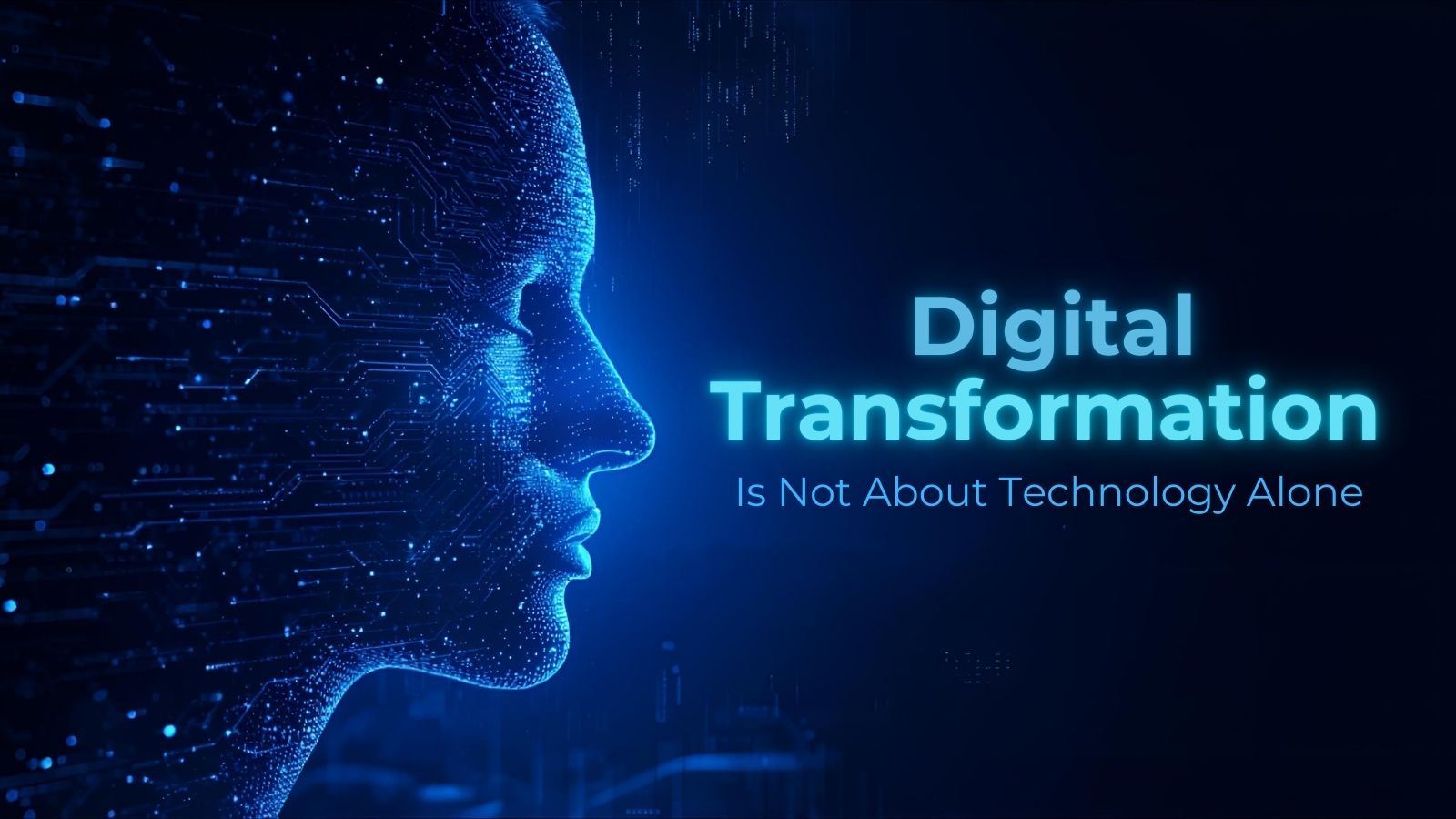
Digital transformation is not about technology alone. Learn how people, processes, and strategy drive real business transformation and long-term growth. Digital transformation is one of the most misunderstood concepts in modern business. Many organizations believe that adopting new software, moving to the cloud, or implementing AI automatically makes them “digitally transformed.” In reality, digital transformation is not just about technology — it’s about changing how a business thinks, works, and grows.
Technology plays an important role, but it is only an enabler. True digital transformation happens when people, processes, and strategy align around a shared vision for improvement. Without this alignment, businesses may become digitally equipped — but not digitally transformed.
Understanding Digital Transformation Beyond Technology
At its core, digital transformation is a business transformation, not an IT upgrade.
It involves rethinking how an organization:
-
Delivers value to customers
-
Operates internally
-
Makes decisions
-
Adapts to change
Installing new tools or platforms does not automatically change how a company operates. Without changes in mindset, culture, and workflows, technology simply digitizes existing inefficiencies.
That’s why Digital Transformation Is Not About Technology Alone — it’s about how technology is used to support better ways of working.
What Digital Transformation Is NOT
Let’s clear up some common misconceptions.
❌ Installing new software does not equal digital transformation
❌ Automating a few tasks does not equal digital transformation
❌ Migrating data to the cloud does not equal digital transformation
❌ Using AI tools without strategy does not equal digital transformation
These actions are examples of digitization, not transformation.
Digitization improves speed and convenience.
Transformation changes how the business operates and thinks.
What Real Digital Transformation Looks Like
True digital transformation focuses on outcomes, not tools.
✅ Redesigning Processes for Efficiency
Instead of automating outdated workflows, transformed organizations redesign processes from scratch. They remove bottlenecks, reduce manual steps, and build systems that scale.
✅ Empowering Teams with Digital Skills
Technology is useless if people don’t know how to use it effectively. Digital transformation invests in:
-
Training
-
Upskilling
-
Cross-functional collaboration
-
Digital literacy
Empowered teams make better use of technology and adapt faster to change.
✅ Making Data-Driven Decisions
Digitally mature businesses rely on data, insights, and analytics, not intuition alone. Decisions are supported by dashboards, KPIs, predictive analytics, and real-time reporting.
✅ Improving Customer Experience
Transformation always starts and ends with the customer. Businesses redesign journeys to be:
-
Faster
-
More personalized
-
More transparent
-
More convenient
Technology supports this, but customer-centric thinking drives it.
A Simple Example: Digitized vs Digitally Transformed
Imagine a company that uses advanced technology but:
-
Employees are not trained
-
Workflows remain mostly manual
-
Teams operate in silos
-
Decisions are still based on intuition rather than data
In this case, the company is digitized, not digitally transformed.
Now compare that with a company that:
-
Aligns technology with clear business goals
-
Trains teams to work digitally
-
Redesigns processes end-to-end
-
Uses data to guide strategy
-
Continuously improves customer experience
That company is truly digitally transformed.
The Three Pillars of Real Digital Transformation
1. People
People are the most critical element of transformation.
-
Leadership must support change
-
Teams must be trained and empowered
-
Culture must encourage innovation and learning
Without people buying into the vision, technology adoption fails.
2. Processes
Technology should simplify and optimize processes — not reinforce inefficiencies.
-
Manual workflows should be redesigned
-
Approval chains should be shortened
-
Collaboration should be seamless
Digitally transformed organizations design processes that are flexible, scalable, and customer-focused.
3. Technology
Technology is the enabler, not the driver.
It should:
-
Support business objectives
-
Integrate with existing systems
-
Scale as the organization grows
-
Provide actionable insights
Choosing the right tools matters — but choosing them for the right reasons matters more.
Why Strategy Comes Before Technology
Many digital initiatives fail because companies start with tools instead of strategy.
Real digital transformation begins by answering questions like:
-
What problems are we trying to solve?
-
What outcomes do we want to achieve?
-
How will success be measured?
-
How will this improve customer and employee experience?
Once goals are clear, technology can be selected to support the strategy, not define it.
Digital Transformation Is a Journey, Not a One-Time Project
One of the biggest mistakes businesses make is treating digital transformation as a one-off upgrade.
In reality:
-
Markets change
-
Customer expectations evolve
-
Technology advances
-
Competition increases
Digital transformation is an ongoing journey of improvement, adaptation, and learning.
Successful organizations continuously:
-
Review processes
-
Train teams
-
Optimize systems
-
Use feedback and data to evolve
The Bigger Picture: Long-Term Business Growth
Digital transformation enables businesses to:
-
Respond faster to market changes
-
Scale operations efficiently
-
Reduce operational costs
-
Improve customer loyalty
-
Innovate continuously
It builds resilience and prepares organizations for the future — not just the next trend.
How Sitara Innovations Supports True Digital Transformation
At Sitara Innovations, we believe digital transformation is about aligning people, processes, and technology — not just deploying tools.
We help businesses:
-
Define clear digital strategies
-
Redesign workflows for efficiency
-
Implement scalable digital solutions
-
Enable data-driven decision-making
-
Train teams for long-term success
Our focus is not just on technology — but on real, measurable business impact.
Conclusion: Technology Enables — Transformation Leads
To sum it up, Digital Transformation Is Not About Technology Alone.
Technology supports the journey — it is not the destination.
Real transformation happens when:
-
Strategy comes first
-
People are empowered
-
Processes are redesigned
-
Decisions are data-driven
-
Customer experience is prioritized
Businesses that understand this difference move beyond surface-level digitization and build organizations that are agile, resilient, and future-ready.
The companies that succeed in the digital age will not be the ones with the most tools — but the ones that know how to use them wisely.
FAQs
Q1: Is digital transformation only about technology?
No. Digital transformation focuses on people, processes, and strategy, with technology acting as an enabler.
Q2: What is the difference between digitization and digital transformation?
Digitization improves existing tasks using technology, while digital transformation redesigns how a business operates and delivers value.
Q3: Why do digital transformation initiatives fail?
Most fail due to lack of strategy, poor change management, untrained teams, and focusing on tools instead of outcomes.
Q4: How long does digital transformation take?
It is an ongoing journey rather than a one-time project, evolving as business needs and technology change.