

Introduction
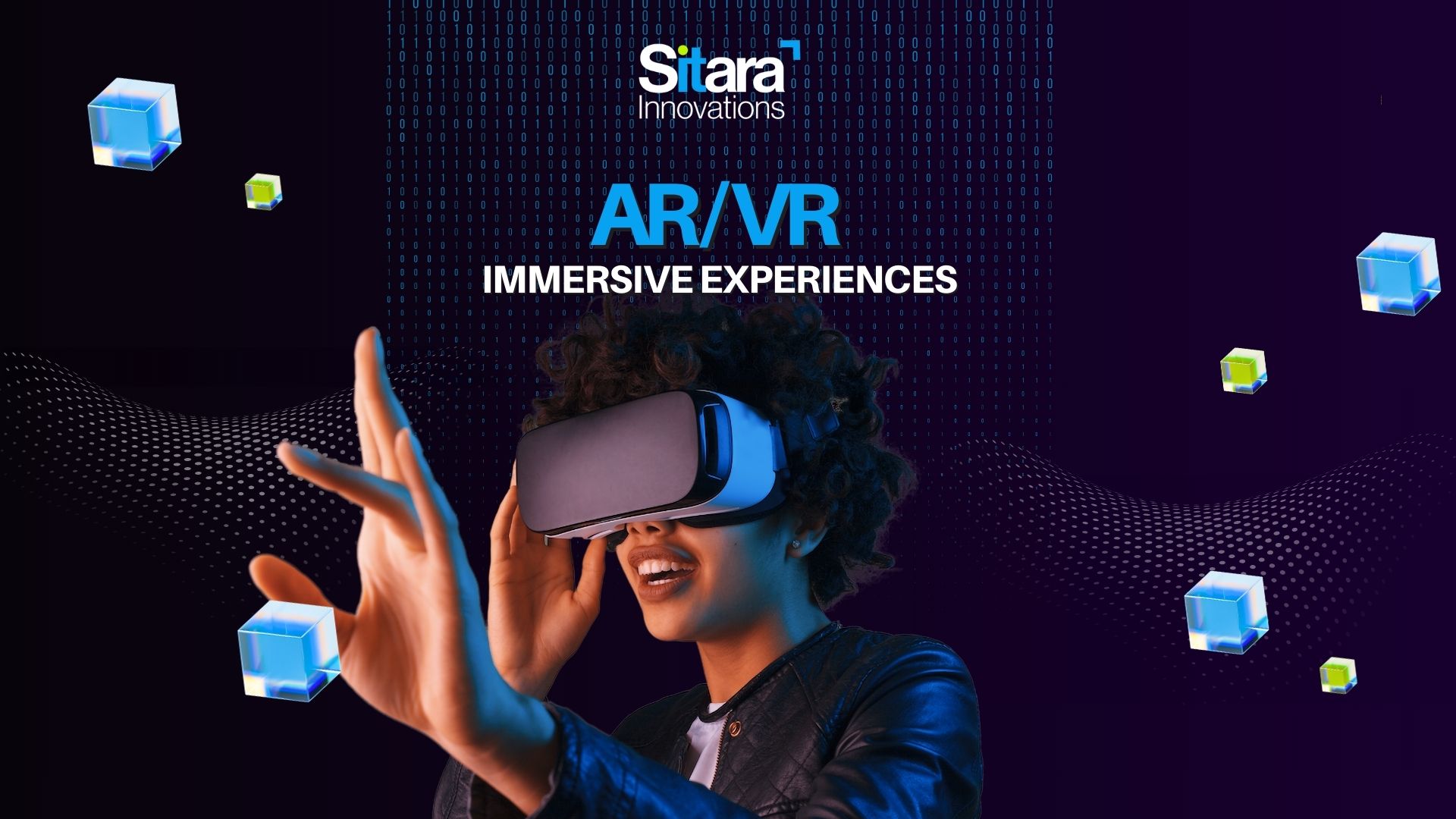
AR & VR Immersive Experiences: The way businesses connect with customers is evolving rapidly. Traditional digital experiences — websites, mobile apps, and social media — are no longer enough to capture attention in a world driven by interactivity and personalization. Today, organizations are turning to Augmented Reality (AR) and Virtual Reality (VR) to create immersive environments that engage users on a deeper level.
AR and VR immersive experiences are redefining how brands communicate, how teams collaborate, and how customers interact with products before making decisions. Instead of simply viewing content, users can now explore digital environments, visualize products in real-world settings, and interact with virtual systems in real time.
In 2026, immersive technology is not a futuristic concept — it is a practical business tool delivering measurable value across industries including retail, real estate, healthcare, education, and manufacturing.
This article explores how AR and VR immersive experiences work, why they matter for modern businesses, and how organizations can implement them strategically for growth.
What Are AR & VR Immersive Experiences
AR and VR immersive experiences refer to technologies that blend or replace physical environments with digital elements to create interactive user engagement.
Augmented Reality (AR) overlays digital information onto the real world through smartphones, tablets, or smart glasses.
Virtual Reality (VR) creates a completely simulated environment where users interact through headsets and motion tracking.
The key difference is simple:
-
AR enhances reality
-
VR replaces reality
Both technologies aim to increase engagement, improve understanding, and enable experiential interaction that traditional media cannot provide.
Why Immersive Experiences Matter for Businesses in 2026
Customer expectations have shifted dramatically. Users now demand personalization, visualization, and real-time interaction. AR and VR technologies help businesses meet these expectations by transforming passive content into active experiences.
1. Higher Customer Engagement
Immersive environments naturally capture attention because users actively participate rather than passively consume. Interactive experiences lead to longer session durations and stronger brand recall.
2. Better Purchase Decision Confidence
AR visualization allows customers to preview products in real-world environments. This reduces uncertainty and increases conversion rates, especially in sectors like real estate, furniture, and retail.
3. Reduced Operational Costs
VR-based training programs allow organizations to simulate complex scenarios without physical risk or infrastructure costs. This is particularly valuable in healthcare, manufacturing, and engineering.
4. Competitive Differentiation
Businesses that adopt immersive technology position themselves as innovative and customer-centric. Early adoption creates a strong market advantage.
Key Business Applications of AR & VR Immersive Experiences
Retail and E-Commerce
Retailers use AR to allow customers to visualize products in their own space. Virtual try-on features, 3D product previews, and interactive shopping environments enhance online buying experiences.
Benefits include:
-
Higher conversion rates
-
Reduced return rates
-
Improved customer confidence
-
Stronger brand engagement
Real Estate and Property Marketing
Virtual property tours allow potential buyers or tenants to explore spaces remotely. Instead of static images, users experience properties in immersive 3D environments.
This approach:
-
Accelerates decision-making
-
Expands global reach
-
Reduces physical visit requirements
-
Enhances property presentation
Corporate Training and Workforce Development
VR simulations provide safe environments for skill development. Employees can practice procedures, respond to complex scenarios, and learn through experience rather than theory.
Organizations benefit from:
-
Faster learning cycles
-
Lower training costs
-
Improved knowledge retention
-
Risk-free practice environments
Healthcare and Medical Training
Medical professionals use immersive simulations to practice procedures, visualize anatomy, and improve diagnostic accuracy. AR also assists during real-time operations by overlaying critical information.
Education and Learning Environments
Immersive learning transforms abstract concepts into experiential understanding. Students can explore historical events, scientific environments, and complex systems interactively.
How AR & VR Improve Customer Experience Strategy
Customer experience is no longer defined by interface design alone. It is defined by emotional connection, ease of understanding, and interactivity. AR and VR immersive experiences strengthen all three elements.
Personalization Through Contextual Interaction
AR allows digital content to respond to physical environments. This creates contextual relevance, making experiences more meaningful for users.
Visualization Before Commitment
Customers prefer to experience products before purchase. Immersive visualization reduces hesitation and builds trust.
Storytelling Through Experience
Brands can communicate value through interactive storytelling rather than static messaging. Immersion makes narratives memorable.
Technology Components Behind Immersive Experiences
Understanding the core technology stack helps businesses plan implementation effectively.
3D Modeling and Digital Asset Creation
High-quality 3D environments form the foundation of immersive experiences. Accurate modeling ensures realism and usability.
Spatial Computing
Spatial computing enables digital elements to interact with physical space, allowing realistic placement and movement.
Motion Tracking and Sensors
These technologies detect user movement and translate it into digital interaction.
AI Integration
Artificial intelligence enhances immersive environments through personalization, behavior analysis, and real-time adaptation.
Implementation Framework for Businesses
Adopting AR and VR immersive experiences requires strategic planning rather than experimental deployment.
Step 1: Define Business Objectives
Organizations must identify whether the goal is engagement, training, marketing, or operational efficiency.
Step 2: Identify High-Impact Use Cases
Not every process needs immersion. Businesses should focus on areas where visualization and interaction deliver measurable value.
Step 3: Develop Scalable Infrastructure
Solutions must integrate with existing systems including CRM platforms, analytics tools, and enterprise software.
Step 4: Train Teams for Adoption
Technology adoption succeeds only when teams understand how to use it effectively.
Step 5: Measure Performance Metrics
Success metrics may include engagement time, conversion rates, training efficiency, or cost reduction.
Challenges Businesses Must Address
Despite its advantages, immersive technology implementation presents challenges that require strategic management.
High Initial Development Investment
Creating high-quality immersive environments requires specialized expertise and infrastructure.
Hardware Accessibility
VR adoption depends on device availability and user comfort with headsets.
Content Complexity
Maintaining realistic and functional environments demands continuous updates.
Integration with Existing Systems
Seamless integration with enterprise workflows is essential for long-term success.
Organizations that approach implementation strategically can overcome these challenges effectively.
The Future of AR & VR Immersive Experiences
The future of immersive technology lies in convergence with artificial intelligence, spatial computing, and real-time data processing.
Key trends shaping the next phase include:
-
AI-driven adaptive environments
-
Device-independent immersive access
-
Real-time collaborative virtual spaces
-
Immersive customer service platforms
-
Digital twins for operational simulation
As technology becomes more accessible, immersive experiences will shift from innovation projects to standard business tools.
Why Businesses Should Invest Now
Organizations that adopt immersive experiences today position themselves for long-term competitive advantage. Early adoption allows businesses to build expertise, develop infrastructure, and establish market leadership before widespread adoption occurs.
Immersive technology is not just about visualization — it is about transforming how customers experience value and how organizations deliver services.
Conclusion
AR and VR immersive experiences represent a fundamental shift in digital interaction. They transform passive engagement into active participation, enabling businesses to communicate, train, and operate in entirely new ways.
In 2026, immersive technology is no longer optional for forward-thinking organizations. It is a strategic capability that enhances customer experience, improves operational efficiency, and supports digital transformation initiatives.
Businesses that embrace immersive environments today will define the competitive landscape of tomorrow.