Introduction
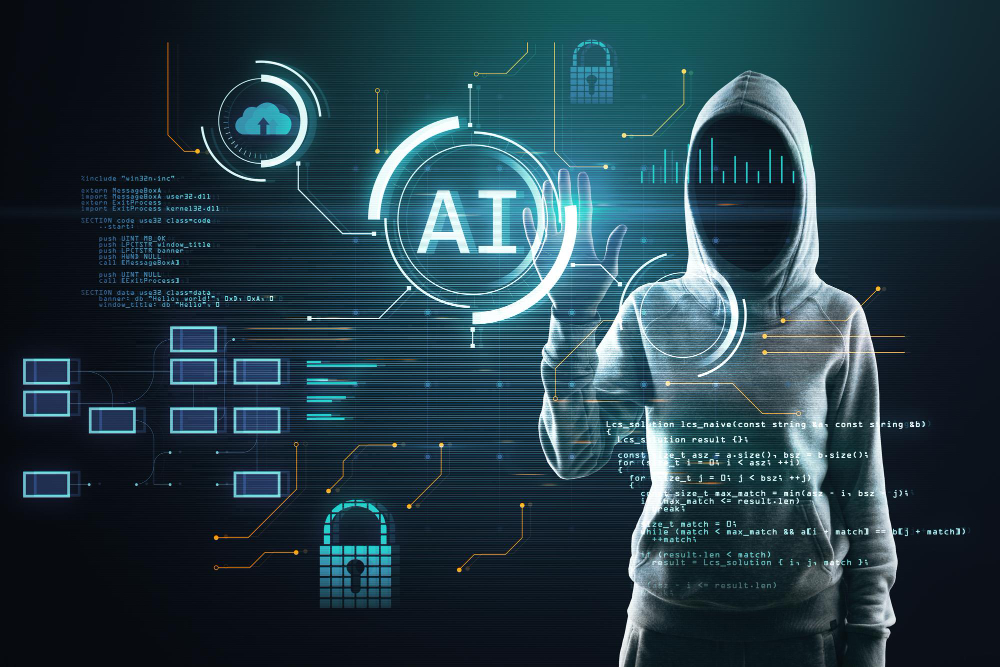
In 2025, AI-Driven Threats Cybersecurity 2025 has emerged as one of the most critical challenges businesses face. As artificial intelligence and machine learning tools become more sophisticated, they empower both defenders and attackers alike. Threat actors now use AI to automate attacks, craft highly personalized phishing, break trust via deepfakes, and find vulnerabilities at scale.
For organizations, defending against these evolving threats means adopting new strategies, tools, and mindsets. At Sitara Innovations, we believe that understanding and preparing for AI-driven threats is non-negotiable. In this article, we’ll dive into what AI-driven threats are, what’s fueling their rise, how they manifest, and what your organization must do to stay secure in 2025 and beyond.
What Are AI-Driven Threats?
AI-driven threats refer to cyber attacks or malicious activities that leverage AI, ML, or automation in their planning, execution, or evasion. They include:
- Generative AI to create phishing or spear-phishing messages that adapt to individual victims.
- Deepfake content (audio/video) used for fraud, impersonation, or social engineering.
- Automated vulnerability scanning and exploit generation.
- AI bots or agents that conduct reconnaissance or adapt attack patterns based on defense responses.
These threats are more efficient, harder to detect, and often aimed at exploiting human psychology and system weaknesses.
Why AI-Driven Threats Are Growing in 2025
Several factors are fueling the surge of AI-driven threats:
- Wider Access to AI Tools: Open source and cloud-based AI/ML platforms make it easier for attackers to access large language models or automation tools.
- Low-Cost Ransomware as a Service (RaaS): Attackers using AI can scale their operations and target smaller businesses that have weaker defenses. Dataconomy+1
- Increased Remote Work & Cloud Adoption: More endpoints, more connected systems, more APIs = larger attack surface.
- Regulatory & Privacy Pressure: As data privacy laws tighten, attackers are creating deeper threats against unstructured data (images, audio, video). Protection needs to adapt. Gartner+1
- Talent Shortages in Cybersecurity: Overwhelmed security teams face burnout. Attackers exploit gaps using AI to automate tasks defenders can’t manage at scale. Gartner+1
Key Types of AI-Driven Threats to Watch
Here are the types of threats that have gained prominence in 2025:
- Adaptive Phishing and Social Engineering: Personalized attack vectors using stolen data and AI-crafted messages.
- Deepfakes for Fraud/Impersonation: Voice or video deepfakes to impersonate executives, trick employees, or manipulate customers.
- Machine Identity Exploits: Unchecked routines, services, and IoT devices using machine accounts that are poorly secured. Attackers target them as pivot points. Gartner+1
- Ransomware-as-a-Service (RaaS): AI helps generate more effective payloads, plan attacks, and negotiate ransoms. Cyber Security News
- IoT & Edge Device Vulnerabilities: Devices with limited computing capacity are less likely to have strong security, and AI driven tools can scan them quickly. Dataconomy+2INE+2
- Zero Trust Compromise Attempts: As organizations move toward Zero Trust Implementation, attackers try to evade or exploit policy misconfigurations, weak identity verification, lateral movements. Dataconomy+1
How Businesses Can Defend Against AI-Driven Threats
To stay ahead, organizations must proactively build defenses. Here are strategies to include in your cybersecurity roadmap for 2025:
Adopt AI-Powered Defense Tools
Use detection tools that employ AI/ML to spot anomalies, unusual behavior, or previously unseen patterns. Security Information and Event Management (SIEM) tools, Extended Detection & Response (XDR), and threat intelligence platforms enhanced by AI can provide early warnings.
Strengthen Identity and Access Management (IAM)
Implement strong machine identity governance, least-privilege models, multifactor authentication (MFA), and monitoring of all service and device credentials.
Zero Trust Architecture
Move toward a Zero Trust model—never trust, always verify. Assume breach, segment networks, enforce strong internal access controls. AI can assist in monitoring for policy breaches and enabling automatic detection of risky behavior.
Secure IoT and Edge Devices
Ensure proper firmware updates, encrypted communications, secure onboarding, and isolation of IoT devices where possible. Edge encryption and adaptive firewalls can help.
Training & Culture
Employees are often the weak link in security. Regular training against phishing, social engineering, deepfake detection, and awareness of AI threats helps. Embed a security culture where people feel responsible.
Regulatory Compliance & Privacy by Design
Ensure your systems treat data protection, personal data, and user consent as foundational. With AI in the mix, transparency, explainability, and user control become crucial.
Emerging & Advanced Trends Linked to AI-Threats
- Post-Quantum Cryptography (PQC): Preparing for future quantum computers that could break current encryption.
- Generative Adversarial Networks (GANs) for Defense: Not just attackers use GANs; defenders can use them to simulate attacks, test robustness, and improve detection. arXiv
- Adaptive Firewalls & Real-Time Network Protection: Firewalls and network control systems that retrain and adapt to threat patterns dynamically. arXiv
Case Studies and Real-World Examples
Here are some examples that highlight how AI-driven threats are playing out and how organizations are responding:
- Large enterprises are using AI agents to reduce false positives in threat detection and improve incident response time.
- Cloud and SaaS providers are focusing on misconfigured APIs as a major risk vector, tightening security around third-party integrations.
- Financial and healthcare sectors are stepping up encryption, auditing, and compliance, especially around personal and sensitive data.
Building Your Cybersecurity Strategy: Roadmap Focus for Sitara Innovations Clients
Here’s a suggested cybersecurity roadmap framework your business can adopt to counter AI-driven threats:
- Assessment Phase:
- Audit your current threat landscape (assets, endpoints, data flows)
- Identify most likely AI-driven risks (phishing, IoT, machine identity issues, etc.)
- Planning Phase:
- Define policies for IAM, Zero Trust, device security
- Choose AI-powered tools for detection & response
- Establish compliance roadmap (privacy, regulation, PQC prep)
- Implementation Phase:
- Deploy tools and train staff
- Secure endpoints and IoT devices
- Apply best practices in data encryption, backups, disaster recovery
- Monitoring & Continuous Improvement:
- Use AI/ML to monitor for anomalous behavior
- Regularly review and update defenses
- Perform red-team exercises or simulations using AI
- Future Readiness:
- Keep pace with quantum crypto readiness
- Prepare for regulatory changes
- Build security culture and resilience
Conclusion
In 2025, AI-Driven Threats Cybersecurity 2025 is no longer a theoretical issue—it’s a real, pressing danger for businesses globally. Attackers using AI and automation have made threats more agile, more personalized, and more dangerous. To survive and thrive, organizations must adapt defensively by integrating AI-powered defenses, robust identity management, Zero Trust architecture, and a security-first culture.
At Sitara Innovations, our goal is to partner with clients in building these defenses—creating strategies, deploying tools, and training teams to not just react, but anticipate and outmaneuver AI-driven threats.
The future belongs to those who prepare. Is your business ready for AI-Driven Threats in Cybersecurity 2025?
FAQs
Q1: What exactly is “AI-driven threats” in cybersecurity?
AI-driven threats are attacks powered by artificial intelligence or machine learning—used by attackers to automate, personalize, and scale their malicious activities, often targeting human vulnerabilities and system weak points.
Q2: How can AI help defenders in cybersecurity?
Defensive AI tools can detect anomalies, automate response, reduce false positives, and analyze unstructured data which humans alone can’t manage at scale.
Q3: Is Zero Trust really necessary with AI threats?
Yes—Zero Trust ensures that even inside your network, access is restricted and continuously verified. This drastically reduces damage if an attacker gets in.
Q4: What sectors are most vulnerable to AI-driven threats?
SMEs, healthcare, finance, IoT-dependent industries, and sectors with poor identity or device management tend to be most at risk.
Q5: How can businesses keep up with threat evolution?
By investing in continuous monitoring tools, regular staff training, adopting adaptive security measures, and staying updated on regulatory & technological changes.